
UAD 3.6 Is Here. Are Appraisers Really Ready?
The residential appraisal profession is approaching one of its most significant reporting changes in decades. On November 2, 2026, Fannie Mae and Freddie Mac's redesigned appraisal reporting framework reaches its scheduled implementation milestone.
The new Uniform Appraisal Dataset, known as UAD 3.6, promises a more detailed, consistent, and transparent way to document residential real estate.
Those objectives are worthwhile. But as the industry approaches the transition, an important question remains:
The answer involves more than understanding a new report. It involves technology, data collection, lender expectations, appraisal fees, and the time required to complete the work.
From the perspective of a practicing residential appraiser in Western Massachusetts, the new reporting structure offers real advantages, but the transition is unlikely to be entirely smooth.
What Is UAD 3.6 and When Does It Become Mandatory?
UAD 3.6 is a redesigned framework for collecting, organizing, and reporting residential appraisal information for applicable mortgage lending assignments.
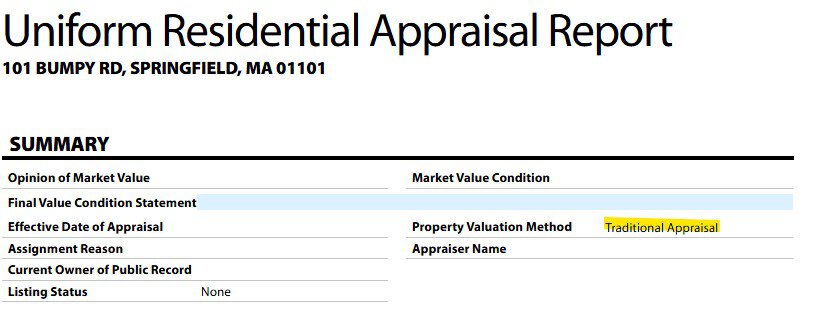
Developed by Fannie Mae and Freddie Mac, the initiative replaces the traditional collection of standardized residential appraisal forms with a flexible, data-driven Uniform Residential Appraisal Report (URAR).
Instead of treating every property through essentially the same fixed form layout, the new report adapts its data requirements to the property type, assignment characteristics, and applicable reporting requirements.
Important Implementation Dates
Limited production began, permitting approved participants to submit UAD 3.6 reports.
Broad production began, allowing all participating lenders to submit UAD 3.6 reports.
The general mandate takes effect for new appraisal reports initially submitted to the GSEs' Uniform Collateral Data Portal (UCDP), subject to approved exceptions.
The end of the temporary exception period. UAD 3.6 becomes mandatory for all new applicable submissions, including those of lenders previously granted exceptions.
The distinction is important because different reporting formats may coexist for a considerable period.
What Is Different About the New Appraisal Report?
A traditional residential appraisal report was built around familiar forms such as the 1004 for single-family properties and the 1025 for small multifamily residential properties.
The new URAR is more structured and adaptable. It is designed to capture additional property details in standardized fields, rather than relying so heavily on short descriptions or supplemental commentary.
Traditional Reporting vs. UAD 3.6
| Category | Traditional Reporting | UAD 3.6 |
|---|---|---|
| Report format | Multiple fixed appraisal forms | Dynamic URAR adapting to property and assignment |
| Condition | Overall ratings and supporting descriptions | More detailed dwelling and component-level information |
| Interior updates | Frequently summarized in commentary | Structured information about kitchen and bathroom updating |
| Property features | Often compressed into fixed fields and addenda | Expanded standardized sections for relevant property features |
| Photographs | Often grouped into traditional photo exhibits | More integrated, detailed photo requirements |
| Data collection | Form-oriented workflow | More structured, data-first reporting workflow |
Greater Detail Does Not Necessarily Mean Greater Complexity of the Property
One of the most meaningful changes is the ability to describe differences within a property more precisely.
Consider a two-family residence in Springfield. The first unit might feature a renovated kitchen, updated bathroom, and relatively recent interior finishes, while the second unit retains older cabinetry, dated fixtures, and substantial age-related wear.
Under the new reporting framework, the appraiser can document more of those differences through structured sections rather than relying primarily on one general condition description for the property.
Condition and Quality
The framework captures additional detail about dwelling condition, construction quality, and relevant deficiencies.
Kitchen and Bath Updating
The report more systematically addresses update status and condition-related information for these important interior areas.
Living Area and Property Features
More structured reporting helps distinguish above-grade space, below-grade areas, accessory features, and nonstandard areas.
Supporting Exhibits
Photographs, sketches, and other supporting documentation are integrated more closely with the data being reported.
A more detailed reporting structure can provide lenders and other authorized readers with a clearer understanding of the property.
However, those additional details also need to be observed, verified, entered, and reviewed. That is where the practical challenges begin.
Are Appraisers Really Ready for UAD 3.6?
The profession has made substantial progress, but learning the requirements is not the same as being comfortable producing complete reports under normal deadlines.
An August 2026 survey of 863 appraisers conducted by CSS provides some insight into the transition.
Source: CSS UAD 3.6 Appraiser Survey, August 18, 2026 . Figures reflect survey respondents and varying question sample sizes.
The findings illustrate a clear distinction between willingness and readiness. Most appraisers surveyed intend to support the new system, but considerably fewer have accumulated extensive hands-on production experience.
Knowing the Requirements Is Only Half the Challenge
Appraisers are not simply learning where to enter the same information on a redesigned form.
They are adapting their inspection procedures, data collection, photography, comparable sale entry, commentary, and review processes to a significantly different reporting structure.
An experienced appraiser may understand how to analyze a property's condition, calculate living area, or select comparable sales. Yet completing those tasks within an unfamiliar software environment can still require substantially more time.
A Distinction Worth Making
An appraiser can be fully competent to value a residential property and still be learning how to efficiently document that analysis under UAD 3.6.
Those are two different issues, and the industry should be careful not to confuse them.
The Software Problem: Are Appraisers Effectively Beta Testing?
A major source of frustration surrounding the UAD 3.6 transition is the software required to complete the new reports.
Companies have invested considerable resources into developing compatible platforms. Nevertheless, support for the new dataset does not necessarily mean that the software provides the efficiency and reliability appraisers have come to expect.
TOTAL: Functionality Is Still Being Developed
a la mode's TOTAL has long been a widely used platform within the residential appraisal profession. Its UAD 3.6 implementation supports the new reporting requirements, but the transition remains a work in progress.
As of late October 2026, a la mode's published development roadmap continues to identify major features and workflow improvements scheduled for later implementation.
These include additional MLS data import functionality, comparable data integration, mobile synchronization enhancements, and tools intended to reduce repetitive data entry.
The company's published release notes have also documented performance improvements and corrections to problems affecting UAD 3.6 reporting.
In practical terms, that means appraisers can be producing reports in a compliant format while familiar productivity features are still being refined.
See a la mode's UAD 3.6 development roadmap for the company's current implementation schedule.
ACI Chose to Stop and Rebuild
ACI took a different approach when its Sky Workbench platform failed to meet expectations.
Despite having received GSE verification earlier in 2026, ACI announced that access to the current Sky Workbench platform would end on October 9, 2026.
The company shifted its focus to a redesigned Workbench 2.0 experience targeted for spring 2027.
That decision carries obvious consequences for users who had been preparing around the original platform.
However, there is something to be said for acknowledging that a product does not yet meet expectations rather than continuing to press forward with it.
Was ACI's Decision the Right One?
In our view, choosing to reassess and rebuild a platform is defensible when the alternative may be an unacceptable production experience.
It would be preferable for software providers to have fully mature products available well ahead of a regulatory deadline. But when that does not happen, transparency about the shortcomings is better than pretending the work is complete.
The Unpaid Cost of Troubleshooting
This leads to a broader industry concern: who absorbs the cost of the transition?
When a software update disrupts an established workflow, the appraiser may spend additional time diagnosing errors, reentering information, contacting technical support, and learning new processes.
That time generally does not appear as a separate line item on an appraisal invoice.
In effect, practicing appraisers can find themselves serving as production-level software testers, identifying problems and refining workflows through actual lending assignments.
Appraiser feedback is valuable and an essential part of improving software. But the professional and financial burden of finding those problems should not be overlooked.
What Does UAD 3.6 Mean for Realtors and Listing Agents?
Real estate agents may notice that appraisal inspections, documentation requests, and report completion timelines change during the transition.
The new reporting structure places greater emphasis on capturing specific property characteristics in a consistent manner.
More Detailed Property Information
Appraisers may need clarification about finished living area, renovations, accessory dwelling units, additions, permitted improvements, and other features that influence the property description.
Accurate MLS information and supporting documentation can help reduce unnecessary follow-up questions.
Inspection and Photography
The redesigned reporting framework also includes more detailed photograph and exhibit requirements.
Depending on the assignment and property characteristics, the appraiser may need additional interior photographs and documentation compared with a traditional appraisal workflow.
Agents should help ensure that the appraiser can access the required areas of the property and that occupants understand the inspection requirements.
Possible Longer Turnaround Times
During the early transition, some appraisal assignments may take longer to complete, particularly when software issues, unfamiliar procedures, or lender review requirements create additional work.
How Realtors Can Help
- Provide accurate descriptions of finished living area and property improvements.
- Make renovation dates, permit information, and relevant property records available when possible.
- Facilitate reasonable access to the interior, basement, attic, and other areas relevant to the assignment.
- Anticipate additional documentation questions and allow realistic time for appraisal completion.
- Avoid assuming that the new reporting format changes the appraiser's obligation to remain independent.
These steps will not eliminate every transition-related issue, but they may help make the process more efficient.
What Does the New Appraisal Report Mean for Homeowners?
For homeowners, the most visible differences may involve the inspection process and the level of detail contained in the completed report.
A UAD 3.6 appraisal may document individual property characteristics more explicitly, including interior updates, accessory features, and relevant condition information.
Will the New Format Change My Home's Appraised Value?
Not automatically.
The reporting format itself does not establish a different market value. Appraisers must still analyze relevant market evidence and develop a credible opinion of value.
A more detailed report may make certain property features or deficiencies easier to identify and communicate, but a new data field does not independently create or remove market value.
Should Homeowners Prepare Differently?
Homeowners should provide reasonable access to areas that must be inspected and make available any relevant information about renovations, additions, or unusual property features.
There is generally no need to renovate or cosmetically alter a home simply because an appraisal is being completed under UAD 3.6.
The appraiser's role remains the same: objectively analyze the property in relation to the market.
Possible Ramifications: Higher Costs, Longer Turn Times, and More Revisions
The transition may have consequences extending beyond the appraiser's office.
Longer Turnaround Times
More extensive data entry, software learning curves, and additional validation may increase completion times, particularly during the initial implementation period.
Potential Fee Increases
Additional inspection, documentation, and reporting time may result in higher appraisal fees for some assignments. The increase will vary by provider and complexity.
More Review Questions
Lenders and appraisal management companies must also adapt to the new data. Unfamiliar reporting fields and review processes may temporarily increase revision requests.
Uneven Appraiser Availability
Appraisers who are not yet comfortable with the new platform may reduce certain lending assignments or require more time until workflows improve.
Will the Additional Work Eventually Decrease?
Some of it likely will. Repeated use, better software integration, improved data imports, and familiarity with the report should reduce inefficiencies over time.
However, the additional structured information and documentation requirements may continue to require more work than some traditional assignments.
The industry should distinguish temporary implementation costs from permanent changes in the expected scope of reporting.
Choppy Water Ahead, but the Profession Must Move Forward
UAD 3.6 has the potential to improve the consistency and transparency of residential appraisal reporting.
More detailed information can help explain differences between properties and give lenders a clearer view of the characteristics supporting an appraiser's analysis.
But there is a significant difference between a well-designed reporting standard and a fully functioning production environment.
Appraisers, software vendors, lenders, and appraisal management companies are all adapting simultaneously.
That inevitably introduces the possibility of delays, miscommunication, technical problems, and additional costs.
The Bottom Line
The residential appraisal profession has adapted to major changes before, and it will adapt to UAD 3.6.
However, appraisers should not be expected to absorb unlimited additional labor while software platforms and lender workflows mature.
For appraisers who intend to continue serving the conventional mortgage market, adoption is ultimately a necessity, subject to the applicable transition and exception provisions.
The road ahead may be rough for a while, but the industry has little choice except to keep moving forward.
The long-term success of UAD 3.6 will depend not merely on its data requirements, but on whether those requirements can be implemented efficiently without diminishing the time available for actual valuation analysis.
Frequently Asked Questions About UAD 3.6
What is UAD 3.6?
UAD 3.6 is the redesigned Uniform Appraisal Dataset used with the new Uniform Residential Appraisal Report for applicable mortgage lending assignments. It expands standardized property reporting and replaces several traditional fixed-form formats.
When is UAD 3.6 mandatory?
The general Fannie Mae and Freddie Mac mandate begins November 2, 2026, for new reports submitted to UCDP. Approved lender exceptions allow a limited transition period, ending in May 2027.
Will UAD 3.6 make appraisals more expensive?
It may. Additional data collection, reporting requirements, and software-related work can increase the time required for some assignments. Fees remain dependent on the specific appraisal and provider.
Will a UAD 3.6 appraisal take longer?
Some appraisers anticipate longer turnaround times, especially during the initial transition. Actual completion times will vary depending on property complexity, software efficiency, and lender requirements.
Does UAD 3.6 change how my house is valued?
The new format changes how property information is collected and reported. The appraiser must still develop an independent, credible opinion of value supported by market evidence.
Does UAD 3.6 apply to divorce and estate appraisals?
The GSE mandate governs applicable mortgage lending submissions. Private divorce, estate, and retrospective appraisals may continue to use other suitable reporting formats based on their intended use and scope of work.
Sources
The following industry publications and official resources informed this article.
-
Fannie Mae - Uniform Appraisal Dataset
Official implementation information, reporting guidance, and policy updates. -
Freddie Mac - UAD 3.6 FAQ
Submission deadlines and transition requirements. -
CSS - August 2026 Appraiser Survey
Readiness, experience, anticipated fees, and turnaround expectations. -
a la mode - UAD 3.6 Feature Roadmap
Published TOTAL development schedule and planned enhancements. -
Appraisal Firewall -
September 30, 2026 Industry Update
GSE policy exceptions and ACI Sky Workbench developments.
Published October 2026. Information reflects announcements available at the time of writing. Software features, implementation requirements, and vendor schedules may change.