
Why Your Zillow Zestimate May Differ From a Professional Home Appraisal
If you've searched for the value of your home online, you've probably encountered Zillow's Zestimate.
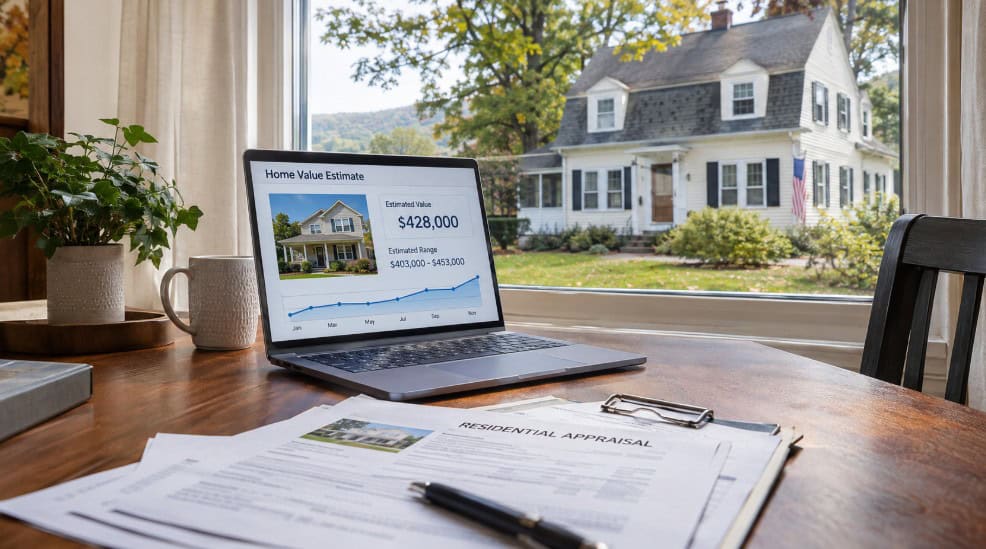
It's quick, free, and convenient. But what happens when Zillow estimates your property at $425,000 and a professional appraisal indicates a different value?
The answer often involves how the property was analyzed, what information was available, and which sales are truly competitive with your home.
Is Zillow Wrong About Your Home's Value?
Not necessarily. Zillow can provide a useful starting point, but its Zestimate and an individual home appraisal are not interchangeable.
Online valuation models analyze large amounts of real estate information to estimate property values. They can identify patterns in sales prices, neighborhood trends, and recorded property characteristics.
An appraiser also relies on market data. However, the appraisal process focuses on the individual property, its characteristics, and the evidence most relevant to its competitive market.
Differences can emerge when public records are incomplete, improvements are not documented, property condition varies, or comparable sales require closer examination.
The Short Answer
Your Zillow estimate may differ from an appraisal because the automated model and the appraiser do not necessarily have the same information or apply the same valuation analysis.
Differences in living area, condition, renovations, neighborhood location, competitive market areas, and comparable sales can influence the result.
Neither number should be evaluated without understanding how it was developed.
What Is a Zestimate and How Does Zillow Calculate Home Values?
A Zestimate is Zillow's automated estimate of a home's market value. It is generated using a proprietary model that analyzes available real estate data.
Zillow reports that its model incorporates public records, MLS information, prior sales, listing activity, property characteristics, and broader housing market trends.
These inputs allow Zillow to estimate property values without performing an individual physical inspection of every residence.
Municipal Property Records
Information about building size, construction year, property type, lot size, and other characteristics.
Real Estate Transactions
Recorded sale prices, transaction history, and available information about other properties.
Listing Information
Current and historical listing details, asking prices, descriptions, and reported property features.
Market Trends
Patterns in broader housing market data that help the model estimate current value.
Where Can the Limitations Appear?
An automated model can process extensive data, but the information available about an individual property may not capture everything a buyer would consider.
For example, a public record might correctly identify a property as a 1960s ranch while providing limited details about interior renovations or deferred maintenance.
The model may have an accurate record of building dimensions without fully recognizing the property's current interior condition or functional utility.
Zillow itself states that the Zestimate is not an appraisal.
For details about the model's purpose and methodology, visit Zillow's explanation of the Zestimate .
How Accurate Is Zillow's Zestimate?
Zillow publishes statistics comparing estimates with eventual sale prices. Its nationwide error rates differ depending on whether a home is listed for sale or remains off the market.
As reported in November 2026, Zillow's nationwide median error rates were:
Source: Zillow Zestimate Accuracy . Nationwide statistics refreshed November 8, 2026. These figures may change as Zillow updates its model.
What Does Median Error Mean?
Median absolute percentage error describes the difference between estimated values and eventual sale prices without regard to whether the estimates were higher or lower.
For example, the 7.21% off-market median means approximately half the measured estimates had errors at or below that percentage, while the other half had larger errors.
It does not mean every Zestimate differs from market value by 7.21% or that every estimate falls within that range.
What Does a 7.21% Difference Represent?
Hypothetical Home Value
$400,000An illustrative residential property value.
7.21% of That Value
$28,840The dollar amount represented by that percentage.
This demonstrates why a seemingly small percentage difference may matter when a homeowner is making a major financial or ownership decision.
It is not a prediction of the Zestimate error for any particular home.
Why Are Listed Homes Often More Accurate?
Once a property is listed for sale, additional information may become available, including listing descriptions, asking prices, photographs, and recent market activity.
An off-market home may have fewer recent data points available for the model.
These national statistics also should not be interpreted as the specific accuracy rate in Springfield, Longmeadow, or any other Western Massachusetts community.
Six Reasons Your Zillow Estimate May Differ From a Home Appraisal
Residential properties can differ in ways that are not obvious from standardized data. An individual appraisal can investigate these differences when relevant to the assignment.
1. Incorrect Square Footage
Recorded living area may be outdated or may not clearly distinguish above-grade and finished below-grade space.
2. Renovations and Updating
Recent improvements may not be fully represented in public records or automated data feeds.
3. Property Condition
Older finishes, deferred maintenance, and other condition differences may affect buyer behavior.
4. Unique Improvements
Accessory living areas, detached buildings, large parcels, and custom features can require additional market analysis.
5. Limited Comparable Sales
Some properties have relatively few recent transactions offering direct comparisons.
6. Neighborhood and Market Areas
Automated models may not fully capture how buyers distinguish between neighborhoods, street locations, and competitive market segments.
Why Condition Matters
Consider two Springfield ranch-style properties with similar above-grade living areas and construction dates.
One has updated kitchen and bathroom finishes, newer mechanical equipment, and limited deferred maintenance.
The other retains older finishes and requires additional repairs and updating.
Although the properties may look similar in a database, buyers may be willing to pay different amounts for them.
An appraiser evaluates condition differences and considers the market's reaction when developing a value opinion.
Important: The amount spent on an improvement does not necessarily equal its contributory value. A $40,000 renovation does not automatically increase market value by $40,000.
Why 2,000 Square Feet Doesn't Mean the Same Thing for Every Home
One important example in Western Massachusetts involves raised-ranch and split-level residential properties.
Consider a raised ranch with approximately 1,000 square feet of above-grade finished area and another 1,000 square feet in a finished level that is partially below grade.
A summarized property record or third-party website might describe the dwelling as having 2,000 square feet of finished space.
However, an appraiser applying relevant single-family appraisal measurement standards would report the above-grade and below-grade finished areas separately.
Two Homes With Different Area Configurations
Raised Ranch
1,000 sq. ft.Above-grade finished area
Plus 1,000 square feet of finished below-grade space.
Two-Story Colonial
2,000 sq. ft.Above-grade finished area
Plus a separate basement level.
Both properties may provide substantial finished space, but their area classification, layout, and functional utility are different.
Does This Mean Finished Basement Space Has No Value?
No. Finished below-grade areas may contribute meaningfully to market value.
The issue is how the space is classified and how comparable properties are analyzed.
The market's response to above-grade and below-grade finished space may differ, depending on property type and competitive sales.
Cape Cod Homes Present Similar Challenges
Many Cape-style homes throughout Western Massachusetts have sloped ceilings, knee walls, dormers, and partially finished second floors.
Municipal property records may use estimated upper-floor areas that differ from a detailed physical measurement.
The actual qualifying finished area may depend on ceiling height, configuration, finish, and the applicable measurement standard.
For more information, see our Home Measurement Services and Calculating Square Footage Using ANSI .
Important distinction: Incomplete or inaccurate property data can affect an automated valuation. However, this does not mean Zillow necessarily misclassifies every raised ranch or Cape. The outcome depends on the model and its underlying data.
Does Zillow Understand Neighborhoods and Competitive Real Estate Market Areas?
Two homes can be located within the same municipality, have similar living areas, and share comparable construction styles, yet compete in different residential market segments.
One important challenge with automated home value estimates involves determining which properties are truly competitive with one another within a local market.
Zillow incorporates geographic information and neighborhood market trends into its valuation models. However, an automated system may not always fully capture the distinctions that influence how buyers evaluate individual residential neighborhoods or particular locations.
Springfield's Neighborhoods Are Not One Uniform Market
Springfield contains numerous distinct residential neighborhoods, including Forest Park, Sixteen Acres, Liberty Heights, East Forest Park, and other areas with different housing characteristics and market activity.
Although properties throughout these neighborhoods may have similar styles, construction periods, and living areas, the competitive markets and pricing patterns may differ.
For example, a Colonial-style home in Forest Park may compete with a different group of properties than a similarly sized Colonial in another section of Springfield.
The appraiser's responsibility is to evaluate the available evidence and identify the market area in which the subject property competes.
Location Differences Can Exist Within the Same Neighborhood
Market differences can become even more specific within an individual neighborhood.
Properties situated along heavily traveled roads, near commercial uses, or in locations with different surrounding development may not compete directly with otherwise similar properties on nearby residential side streets.
These differences do not automatically result in higher or lower values. Their influence must be evaluated using relevant market evidence.
An Example From Springfield
Consider two otherwise similar single-family homes within the same Springfield neighborhood.
One is located along a primary road with substantial through traffic. The other is located on a smaller residential side street.
A basic property database may identify both dwellings as similar in size, style, age, and general location.
However, if buyers consistently respond differently to those street locations, an appraiser can investigate that market reaction through comparable sales and other relevant evidence.
The result may support a location adjustment or a different selection of comparable properties.
Geographic Proximity Does Not Automatically Mean Comparability
The closest sale is not necessarily the best comparable.
A sale located three streets away may be less competitive than one located two miles away.
A residential appraiser evaluates which transactions reflect properties that typical buyers would reasonably consider alternatives to the subject.
That analysis may require extending the comparable search beyond an immediate neighborhood when more relevant transactions are available elsewhere in the competitive market area.
The reasons for selecting those sales should be supported by the available market evidence rather than geographic distance alone.
A good example of this in Springfield is the East Forest Park neighborhood and it being adjacent to sections of Hill McKnight (Bay, Old Hill, Upper Hill, McKnight). Because a house may provide similar characteristics, the locational values and access to amenties may differ too greatly to be considered comparable.
Why This Can Matter for Automated Estimates
Automated valuation models can process large amounts of geographic and transaction data, but the details of how a specific model identifies competitive neighborhoods and comparable properties may not be readily apparent to the homeowner.
A professional appraisal provides the opportunity to examine and explain why particular transactions are considered relevant to the subject property.
This distinction can be especially important for older housing stock, unusual property designs, mixed residential areas, and neighborhoods with limited competitive sales.
Local Market Knowledge Matters: An automated valuation model can analyze extensive geographic and sales information. An individual appraisal can go further by investigating and supporting the competitive market area selected for a particular property. The analysis should reflect observed buyer behavior and market evidence, not distance alone.
How Appraisers Evaluate Comparable Sales
Residential appraisers analyze transactions involving properties that are competitive with the subject.
Differences involving living area, condition, construction quality, site size, bathrooms, garage utility, location, and other market-relevant features may require adjustments supported by market evidence.
The process involves evaluating the quality and relevance of available information rather than simply averaging nearby sale prices.
Learn more about this process through our Residential Market Value Appraisal Services .
Pilgrim Colonial Appraisal Services provides residential valuations throughout Springfield, Longmeadow, East Longmeadow, Wilbraham, Chicopee, Agawam, Westfield, and surrounding Western Massachusetts communities.
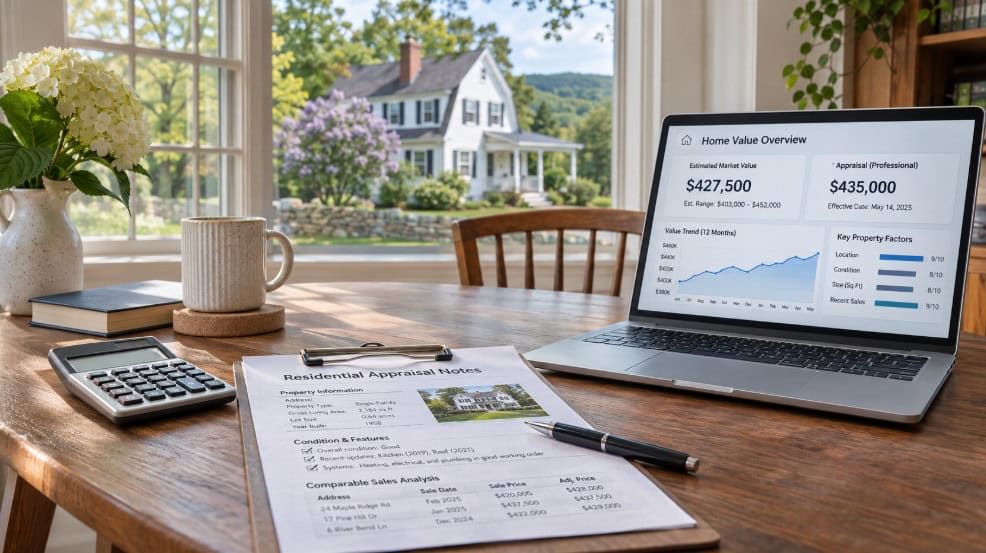
Zillow Zestimate vs. Professional Appraisal vs. Realtor CMA
All three can provide useful information about real estate value, but they serve different purposes.
| Feature | Zestimate | Appraisal | Realtor CMA |
|---|---|---|---|
| Prepared by | Automated model | Licensed or certified appraiser | Real estate agent or broker |
| Purpose | Automated home value estimate | Opinion of value for a defined assignment | Pricing and marketing analysis |
| Inspection | No individual property inspection | Determined by assignment scope | Varies |
| Market evidence | Model-driven data | Property-specific analysis | Relevant sales and competing listings |
| Professional appraisal report | No | Yes | No |
Which One Should a Homeowner Use?
For general curiosity, a Zestimate may provide a useful starting point.
For a proposed listing, a real estate agent's CMA can help establish pricing and marketing strategy.
For financial, legal, or ownership decisions requiring an independent property-specific opinion, a professional appraisal may be more appropriate.
Can an Appraisal Differ From the Eventual Sale Price?
Yes. An appraisal is an opinion of value developed as of a specified effective date.
An eventual sale price may differ due to negotiations, transaction terms, marketing exposure, buyer motivations, or changing market conditions.
An appraisal does not guarantee the price for which a property will sell.
What Should You Do if Your Zestimate Seems Too High or Too Low?
Before concluding the estimate is inaccurate, review the property facts that may influence the result.
Verify the Property Facts
Review reported square footage, property type, bedroom and bathroom counts, lot size, and other characteristics.
Identify Missing Improvements
Check whether renovations, additions, or significant property changes are reflected in available information.
Review Comparable Sales
Consider whether nearby transactions are meaningfully competitive with your property in size, location, condition, and utility.
Consider Your Valuation Purpose
Determine whether you need an approximate online indication or a more detailed value conclusion for a particular financial decision.
Consider an Independent Appraisal
When an important financial, legal, or ownership decision is involved, a professional appraisal may provide more appropriate support.
Can You Change Your Zestimate?
Zillow allows eligible homeowners to claim their property and update certain home facts.
Correcting inaccurate property characteristics may improve the information available to its valuation model.
However, homeowners cannot manually choose a Zestimate or guarantee that changing the property facts will produce a particular value.
For current guidance, visit Zillow's Zestimate information page .
Remember: Updating Zillow does not automatically correct municipal assessment records, MLS listings, or an existing professional appraisal. These are separate sources of information.
When Is a Professional Home Appraisal Worth Considering?
Not every homeowner needs a paid appraisal simply because an online estimate seems surprising.
However, certain circumstances can benefit from a more detailed, independent opinion of market value.
Reasons to Consider a Professional Appraisal
- Preparing to sell a home with unusual characteristics
- Evaluating a private property purchase or ownership transfer
- Considering a divorce settlement or property buyout
- Administering an estate or valuing inherited property
- Reviewing conflicting square-footage or property information
- Making a financial decision involving significant real estate
Preparing to Sell Your Home?
A pre-listing appraisal can provide an independent opinion of value before finalizing a listing strategy, particularly when pricing opinions differ.
Divorce, Estate, or Ownership Decisions?
These assignments may require a particular intended use, effective date, and appraisal reporting scope.
Explore our Divorce Appraisal Services and Estate and Date-of-Death Appraisals .
How Much Does an Appraisal Cost?
Fees depend on property type, complexity, location, and scope of work.
See our Massachusetts Home Appraisal Cost Guide for general pricing information.
Common Questions About Zillow Estimates and Professional Appraisals
Why is my Zestimate higher than my home appraisal?
Differences can result from property condition, living area, renovations, location, competitive market selection, or the market evidence used in the valuation.
An appraisal may identify characteristics not fully represented in the automated estimate.
Can Zillow underestimate my home's market value?
Yes. An automated estimate may be lower than market value when available data is incomplete or does not fully reflect property improvements or market characteristics.
The opposite can also occur.
Does Zillow understand different neighborhoods?
Zillow incorporates geographic information and local housing market trends into its valuation models.
However, an automated estimate may not fully reflect the specific differences in buyer behavior between individual neighborhoods, street locations, or competitive market areas.
An individual appraiser can investigate those distinctions and explain the selection of comparable sales using relevant market evidence.
Is a Zestimate considered a professional appraisal?
No. Zillow expressly states that its Zestimate is not an appraisal.
It is a computer-generated estimate based on available information.
How often does Zillow update the Zestimate?
Zillow reports that most Zestimates are refreshed multiple times per week, although updates can sometimes be delayed.
Frequent updates do not guarantee that all property information is accurate.
Does Zillow know if I've renovated my home?
Not necessarily. Some renovations may be reflected in public records, listing information, or homeowner-provided property details.
Other improvements may not be fully represented in the available data.
Can incorrect square footage affect Zillow's estimated value?
Yes. Living area is one of the property characteristics used in automated valuation models.
However, how each model handles above-grade and below-grade finished areas depends on its data and methodology.
Learn about professional home measurement services .
Can I use Zillow's estimate for a divorce or estate?
An online estimate may provide preliminary information, but it is not a substitute for a professional appraisal when a property-specific valuation is required.
Divorce and estate assignments may also require a specified effective date and intended users.
Will a mortgage lender accept my Zestimate?
A Zestimate is not a professional appraisal and does not automatically satisfy a lender's valuation requirements.
Lenders may use different approved valuation methods depending on the loan program and transaction.
Does a home appraisal guarantee a selling price?
No. An appraisal is a supported opinion of value as of a specified effective date.
The actual sale price may differ because of negotiations, transaction terms, market exposure, and other factors.
Should I get an appraisal before selling my home?
It may be worthwhile when a property is unusual, pricing opinions vary significantly, or the homeowner wants an independent market value opinion before listing.
Our Pre-Listing Appraisal Services page explains the potential benefits.
Learn More About Residential Property Values
Explore these resources to better understand how real estate appraisers measure, research, and value residential properties.